
Cover Crops
What clover can do for your soil
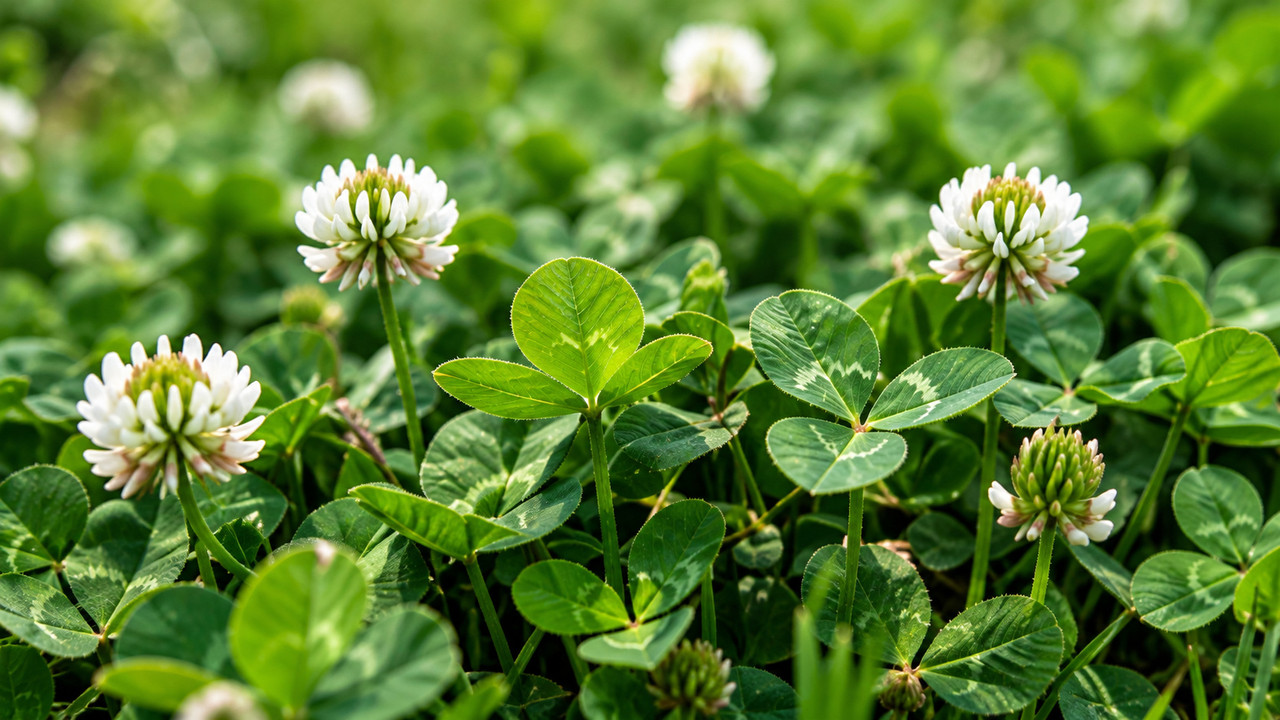
Clover can contribute nitrogen, ground cover and useful forage. Choosing the right type starts with how you plan to use the field.
Clover is easy to recognize once it flowers. Deciding where it belongs on your land takes a closer look.
The white clover in this photograph has a different growth habit from the taller red clover often used in forage and cover crop systems. Both have a place, but the name on the bag matters. Start with the species and your intended use.
Understand the nitrogen benefit
Clover is a legume. With the right bacteria working in nodules on its roots, it can capture nitrogen from the air and use it to grow. Some of that nitrogen can become available to later crops as plant material breaks down.
The amount varies with the stand, growing conditions and management. A thin patch of clover should not be credited the same as a productive stand. Use regional guidance when making fertilizer decisions, and check whether the seed needs a compatible inoculant before planting.
Choose clover for the way you use the ground
White clover spreads along the soil surface and is often used in pasture mixtures. Red clover grows more upright and can fit hay production and crop rotations. Neither choice removes the need to consider moisture, drainage and soil fertility.
Take a soil test before establishing a stand. It gives you a better basis for correcting pH and nutrient problems than simply adding seed to a struggling field.
Think about the next two seasons as well as planting day. Will animals graze it? Will you cut it? Will you terminate it before another crop? Answering those questions helps narrow the choice.
Make establishment part of the purchase
Ask about planting depth, timing and how to handle existing vegetation when you order. Clover seed is small, and getting it into the right position in the soil deserves attention.
Keep the seed label with your planting notes. Write down the field, planting date and species, then take a few photographs as it develops. You will have something concrete to compare when you decide whether to repeat the planting or change it.
Considering clover for a pasture, food plot or rotation? Tell Central Wisconsin Seed what the ground is used for and what you hope to improve.
Good questions grow better results.
Talk with our team about seed for your land.